
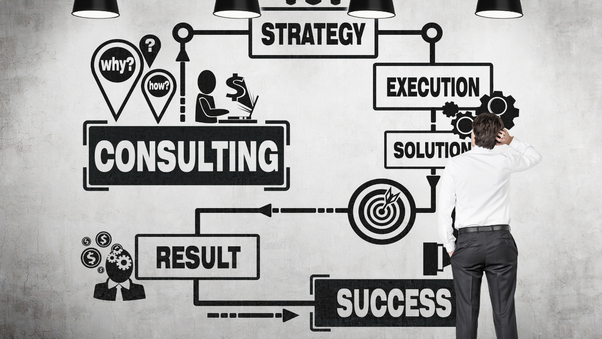
Technology decisions can become complicated when businesses are managing multiple systems, changing customer expectations, and growing operational requirements at the same time. Choosing a new platform without understanding how it fits into existing processes can create more problems than it solves. Solution Consultancy Dubai by Al-Awaasif helps businesses approach technology decisions from a business-first perspective, connecting operational requirements with practical digital solutions.
For organisations in Dubai and across the UAE, technology investments need to support measurable business objectives. Whether a company is modernising an existing operation, introducing a new digital system, or looking for ways to improve inefficient workflows, professional consultancy can provide a clearer direction before implementation begins.
Al-Awaasif works with businesses to understand their requirements, vision, market, and target audience before recommending appropriate technology approaches. Its broader capabilities include process automation, business process re-engineering, custom development, training, and technical support.
Starting With the Business Problem
Technology should solve a business problem rather than become the problem itself.
A company may know that its current systems are inefficient without knowing exactly what needs to change. Employees might be spending excessive time on repetitive tasks, information may be spread across several platforms, or customers may experience delays during certain stages of a process.
Consultancy can help identify the underlying issue before a business commits to a particular technology.
Instead of beginning with a software product, the process starts by examining what the organisation is trying to achieve. This can help businesses avoid selecting technology simply because it is popular or widely used.
For Dubai companies, this business-first approach can create a clearer foundation for digital investment.
Mapping Technology Requirements to Real Operations
Every organisation has its own workflows, teams, systems, and priorities.
A solution that works effectively for one company may not necessarily suit another business operating in the same industry. Differences in processes, customers, data, employees, and existing infrastructure can significantly affect technology requirements.
Solution consultancy can help map these requirements before implementation.
The objective is to understand how information moves through the organisation, where employees interact with systems, which processes create delays, and what improvements are required.
This provides a more realistic foundation for deciding whether the right answer involves automation, custom software, system integration, process redesign, or another technology approach.
Avoiding Technology That Creates New Complexity
One of the risks of digital transformation is adding another disconnected system to an already complicated technology environment.
A business may introduce a new platform to solve one problem, only to discover that employees now need to enter information into multiple systems or manually transfer data between applications.
Consultancy can help businesses examine the wider technology environment before making implementation decisions.
The question becomes not simply, “Which software should we buy?” but rather, “How should this solution work with the systems we already have?”
This broader view can help reduce unnecessary duplication and create a more connected digital environment.
Planning Around Future Business Requirements
Technology should support where a business is going, not only where it is today.
A company may currently operate with a small team but expect significant growth. Another organisation may plan to introduce new services, expand into additional markets, or increase the number of customers it serves.
These possibilities can influence the type of solution that makes sense today.
A consultancy-led approach can consider scalability from the beginning. This does not mean building an unnecessarily complex system immediately. Instead, businesses can identify which capabilities are essential now and which may become relevant later.
For companies in Dubai’s rapidly evolving business environment, this forward-looking approach can make technology planning more adaptable.
Finding Opportunities for Process Improvement
Technology and business processes are closely connected.
Sometimes the problem is not that a company lacks software, but that an existing process was never designed efficiently. Employees may follow unnecessary steps, information may pass through too many approvals, or manual work may exist where automation could be considered.
Al-Awaasif’s wider expertise includes Process Automation and Business Process Reengineering, allowing businesses to look beyond individual software products and consider how operations themselves can be improved.
This can be particularly valuable when a company wants technology to support a better workflow rather than simply digitise an inefficient one.
Considering the People Behind the Technology
A technology project affects employees as well as systems.
Even a technically capable solution can struggle if employees do not understand how it fits into their responsibilities. Users may need new workflows, training, access permissions, or changes to established working habits.
A practical consultancy process therefore needs to consider the people who will use the solution.
Understanding user requirements can help businesses create technology that is easier to adopt and more closely aligned with daily operations.
Al-Awaasif also provides Training Solutions and Technical Support, giving businesses additional capabilities beyond the initial technology planning stage.
Creating a Clearer Digital Transformation Roadmap
Digital transformation does not always happen through one large project.
Businesses can often benefit from a phased roadmap that identifies immediate priorities while keeping longer-term objectives in view.
The first stage might involve improving a critical workflow. A later phase could introduce automation, integrate additional systems, or develop a custom application.
Breaking transformation into practical stages can make major technology changes easier to manage.
Al-Awaasif follows a broader consultancy-to-delivery approach, with its stated process including consultancy, planning, delivery and quality assurance, followed by launch.
Making Technology Decisions With Greater Confidence
Technology investments can involve significant time, resources, and organisational change. Businesses therefore benefit from understanding the reasoning behind a proposed solution before implementation begins.
A structured consultancy process can help decision-makers compare requirements, identify priorities, consider integration needs, and establish a clearer path forward.
For Dubai businesses, this can make digital transformation less about reacting to individual technology problems and more about building a coordinated plan around business objectives.
Conclusion
Solution Consultancy Dubai by Al-Awaasif helps businesses approach technology decisions with greater clarity by connecting digital requirements with real operational challenges. Instead of selecting systems first and trying to adapt the business afterwards, organisations can begin by understanding their workflows, users, existing technology, and future objectives.
Al-Awaasif combines consultancy with capabilities across process automation, business process re-engineering, custom solutions, training, technical support, analytics, and other digital technologies.
For businesses in Dubai and across the UAE, Al-Awaasif can provide a technology-focused consultancy approach that helps turn complex business requirements into practical digital plans built around the organisation’s actual needs.